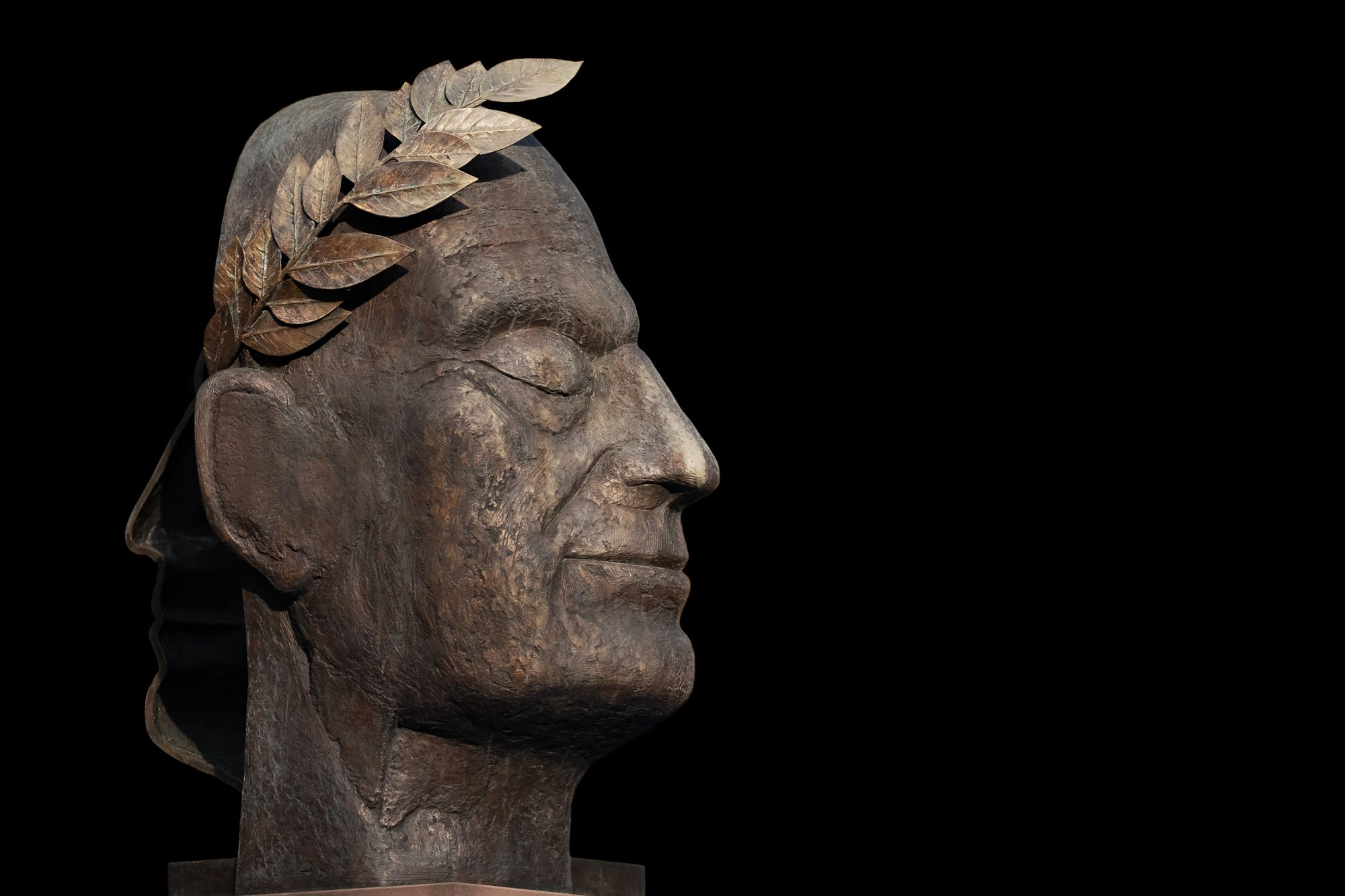
Selected passages from Caesar: Life of a Colossus by Adrian Goldsworthy.
“Although he was fiercely intelligent and highly educated, Caesar was a man of action and it is for this that he is remembered.”
“He thus presented an odd mixture of traditional frugality and modern self indulgence.”
“Caesar demanded perfection”
“Caesar had accustomed himself to great effort and little rest; to concentrate on his friends’ business at the expense of his own, and never to neglect anything which was worth doing as a favor”
“Caesar possessed the highest skill and elegance of style, but also the most perfect knack of explaining his plans.”
“His personal example was vital in encouraging the soldiers to meet his standards. Caesar led the column on training marches and in the field, sometimes on horseback, but more often on foot, just like the ordinary legionaries. It was a gesture intended to show them that he was not expecting them to do anything he would not do himself.”
Plutarch on Caesar:
“That he should undergo toils beyond his body’s apparent power of endurance . . . because he was of a spare habit, had soft and white skin, suffered from epileptic fits . . . Nevertheless, he did not make his feeble health an excuse for soft living, but rather his military service a cure for his feeble health, since by wearisome journeys, simple diet, continuously sleeping in the open air, and enduring hardships he fought off his trouble and kept his body strong against its attacks.”
“Whenever he felt that it was in his interest, Caesar was absolutely ruthless”
“His strategy was aggressive, seizing and maintaining the initiative, and never doubting his ultimate success regardless of the odds ranged against him.”
“The die has been cast”
“Never one to delay unless this would bring him clear advantage”
“Crassus had boasted that only a man who could raise an army from his own resources could truly call himself rich.”
“But fortune, which has great power in all matters and most of all in war, causes great shifts in human affairs with just a little disturbance.”
“Veni Vidi Vici”