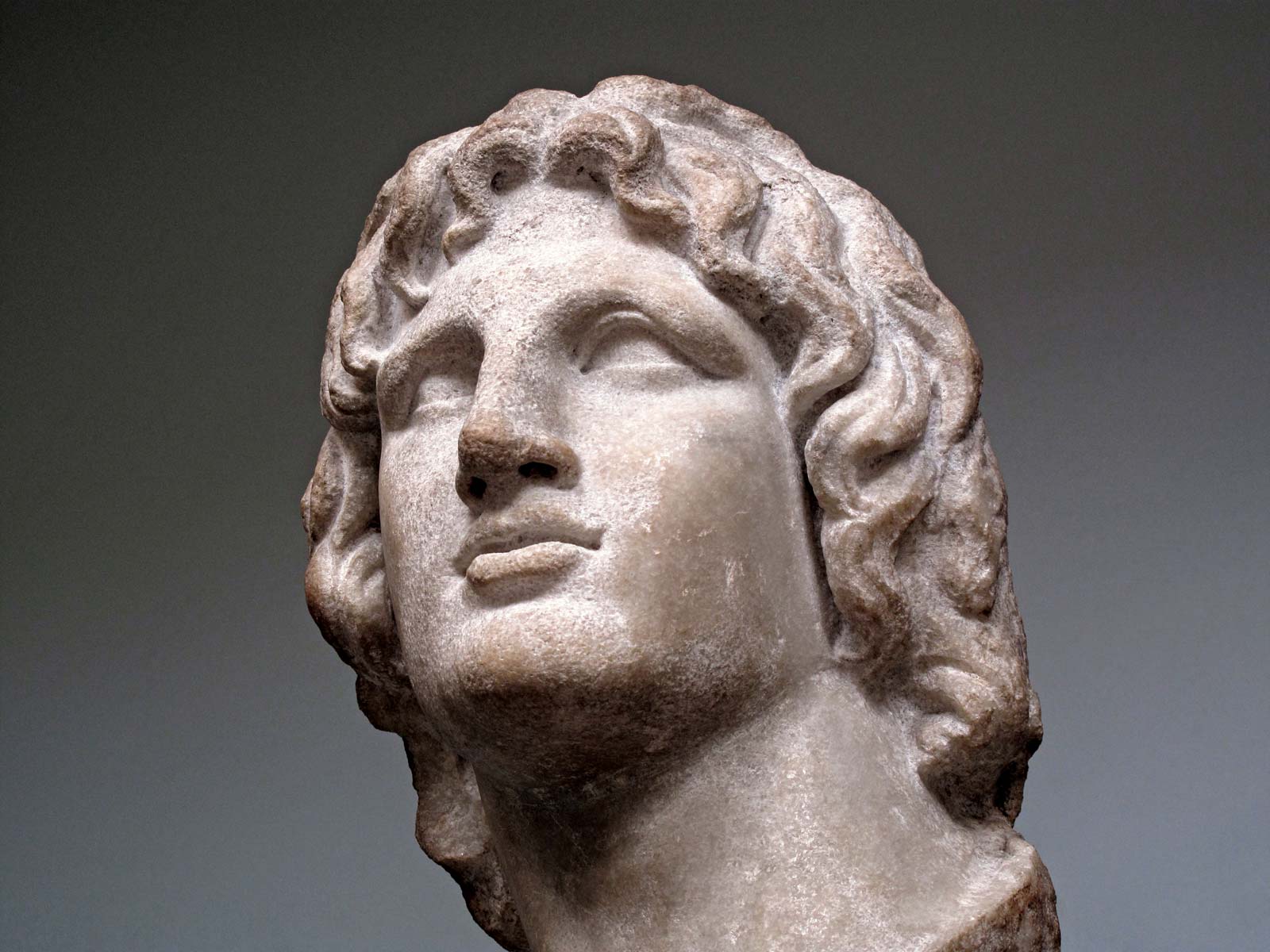
Selected passages from Alexander of Macedon, 356–323 B.C.: A Historical Biography by Peter Green.
“Pothos . . . a ‘longing for things not yet within reach, for the unknown, far distant, unattained’”
“A man whose one overriding belief is in his own destiny will not be doctrinaire in other matters. All else must be subservient to that one glittering goal. The true obsessional conqueror tends paradoxically, towards indiscriminate opportunism tempered with propaganda, a phenomenon which Alexander’s career amply illustrates.”
“sois mon frère ou je te tue”
Alexander to Darius after winning the first direct battle between the two:
“In future let all communication you wish to make with me be addressed to the King of all Asia. Do not write me as an equal. Everything you possess is now mine; so, if you should want anything, let me know in the proper terms, or I shall take steps to deal with you as a criminal. If, on the other hand, you wish to dispute the throne, stand and fight for it and do not run away. Wherever you may hide yourself, be sure I shall seek you out.”
“All absolute autocrats end in spiritual isolation, creating their own world, their private version of the truth: to this depressing rule Alexander was no exception”
“the king regarded conquest and exploration as an end in themselves, the natural condition of man”
“For a man who is a man, work, in my belief, if it is directed to noble ends, has no object beyond itself.”
“He had perhaps the most extraordinary and talented team of subordinates in all history”
“Once again Alexander was seized by the spirit of emulation: ever strive to be the best”
“Alexander’s true genius was as a field-commander: perhaps, taken all in all, the most incomparable general the world has ever seen. His gift for speed, improvisation, variety of strategy; his cool-headedness in a crisis, his ability to extract himself from the most impossible situations; his mastery of terrain, his psychological ability to penetrate the enemy’s intentions — all these qualities place him at the very head of the Great Captains of history.”
“He personifies an archetypal element, restless and perennial, in human nature: the myth of the eternal quest for the world’s end, memorably summed up by Tennyson in the last line of Ulysses: ‘To strive, to seek, to find, and not to yield.’”