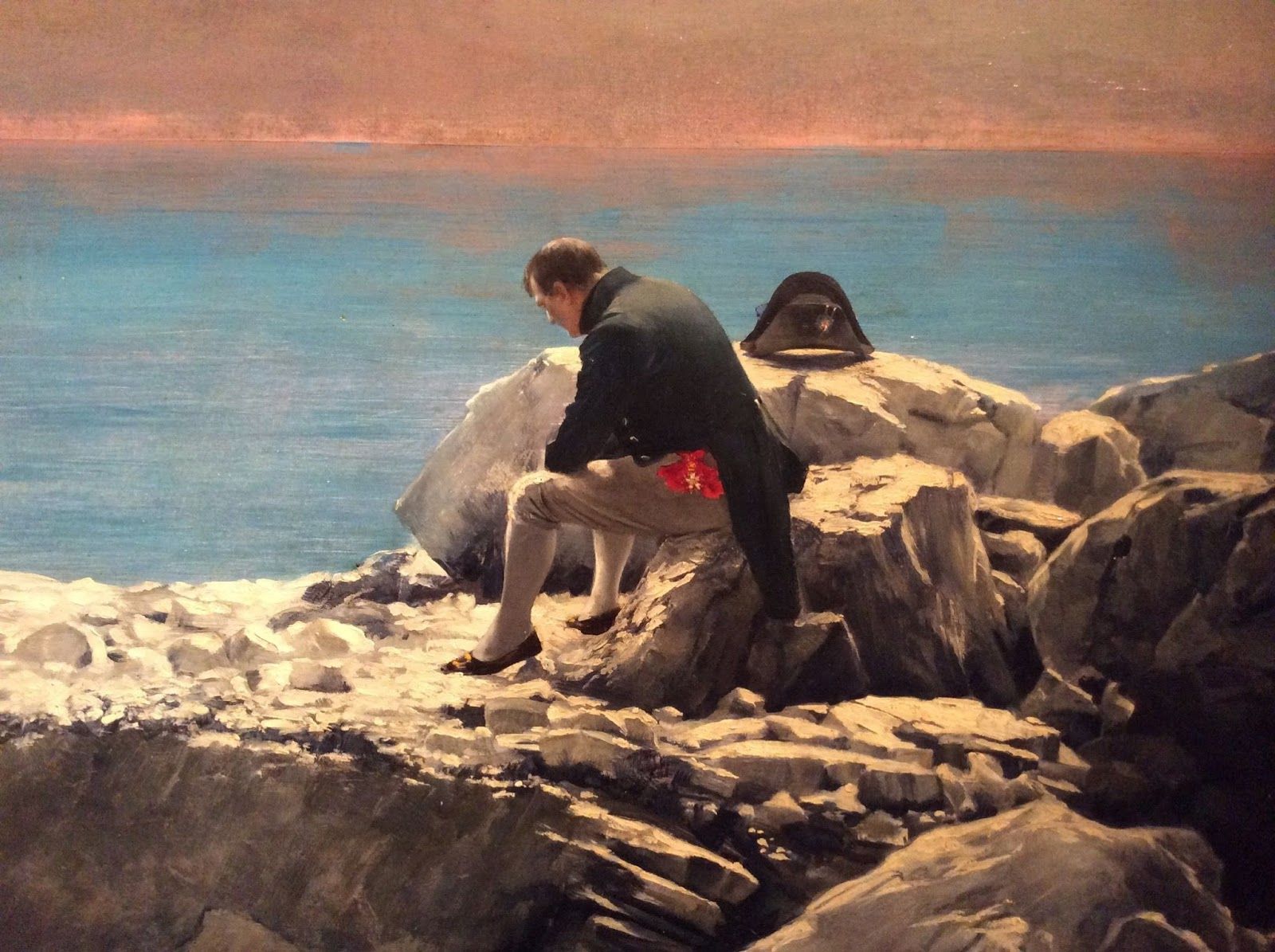
Selected passages from Napoleon: A Life by Andrew Roberts. Napoleon > Caesar > Alexander.
“The reading of history very soon made me feel that I was capable of achieving as much as the men who are placed in the highest ranks of our annals”
“I was the poorest of my classmates, they had pocket money, I never had any. I was proud, I was careful not to show it . . . I didn’t know how to play or smile like the others.”
“His acceptance of the revolutionary principles of equality before the law, rational government, meritocracy, efficiency and aggressive nationalism fit in well with his ethos”
“His father’s early death may also in part explain Napoleon’s own drive and boundless energy; he suspected, correctly, that his own lifespan would be short.”
“He ate only once a day at 3 p.m., thereby saving enough money from his officer’s salary to send some home to his mother; the rest he spent on books. He changed his clothes once every eight days. He was determined to continue his exhaustive autodidactic reading program”
“Do you know how I managed? By never entering a café or going into society; by eating dry bread, and brushing my own clothes so that they might last the longer. I lived like a bear, in a little room, with my books for my only friends … These were the joys and debaucheries of my youth.”
“For Napoleon there was no such thing as too much work.”
“I always found him at his post; when he needed a rest he lay on the ground wrapped in his cloak: he never left the batteries.”
“You know that my destiny lies in the hazard of combat, in glory or in death.”
“He read biographies of commanders who had fought there and had the courage to admit his ignorance when he didn’t know something.”
“Vaulting ambition can be a terrible thing, but if allied to great ability — a protean energy, grand purpose, the gift of oratory, near-perfect recall, superb timing, inspiring leadership — it can bring about extraordinary outcomes”
“Nothing is so important in war as an undivided command”
“Since the campaign had begun a year earlier, Napoleon had crossed the Apennines and the Alps, defeated a Sardinian army and no fewer than six Austrian armies, and killed, wounded or captured 120,000 Austrian soldiers. All this he has done before his twenty-eighth birthday. Eighteen months earlier he had been an unknown, moody soldier writing essays on suicide”
“Napoleon taught ordinary people that they could make history, and convinced his followers they were taking part in an adventure, a pageant, an experiment, an epic whose splendor would draw the attention of posterity for centuries to come”
“Napoleon learned many essential leadership lessons from Julius Caesar, especially his practice of admonishing troops he considered to have fallen below expectations”
“Winning is not enough if one doesn’t take advantage of success” — Napoleon
“Napoleon was a bonafide intellectual . . . He championed science and socialized with astronomers; . . . And he went nowhere without his large, well-thumbed traveling library.”
To his Mediterranean army before invading Egypt:
“Europe is watching you. You have a great destiny to fulfill, battles to fight, dangers and hardships to overcome. You hold in your hands the future prosperity of France, the good of mankind, and your own glory.”
“The fate of a battle is the result of a single instant — a thought, the decisive moment comes, a moral spark is lit, and the smallest reserve accomplishes victory.” — Napoleon
“For all his military genius, intellectual capacity, administrative ability and plain hard work, one should not underestimate the part that sheer good luck played in Napoleon’s career.”
“A tireless worker with inexhaustible resources, he linked and coordinated the facts and opinions scattered throughout a large administration system with unparalleled wisdom . . . he quickly taught himself to ask short questions that demanded direct answers.”
“What a pity the man wasn’t lazy.” — Talleyrand on Napoleon
“Everything passes rapidly on earth, with the exception of the mark we leave on history” — Napoleon
“Napoleon was excellent at prioritization, dealing immediately with urgent matters, placing important but not urgent papers in a stack to be dealt with afterwards, and throwing anything he considered unimportant into the floor.”
“To live is to suffer, and a human being who is worthy of honor must always struggle for mastery of self.” — Napoleon
“More battles are lost by loss of hope than loss of blood” — Napoleon
“In my own case it’s taken me years to cultivate self control to prevent my emotions from betraying themselves . . . Without all this self-control, do you think I could have done all I’ve done?” — Napoleon
“True heroism consists of being superior to the ills of life, in whatever shape they may challenge to the combat.” — Napoleon on board the HMS Northumberland, 1815